CTS Webinar: Preparing Transportation Professionals for AI Integration
Monday, December 15, 2025, 12:00–1:30 pm
Virtual
About the Event
Artificial intelligence (AI) is rapidly reshaping how we design, plan, and manage infrastructure systems. In this webinar, CTS scholars Qizhi He and Seongjin Choi from the University of Minnesota’s Department of Civil, Environmental, and Geo- Engineering discussed how AI tools are beginning to influence teaching, research, and professional practice in civil engineering. Their conversation considered how the field can adapt curriculum and training to prepare future engineers for an AI-integrated profession. They also explored questions around quality management, professional ethics, and community-centered design in an AI-driven context.
Offering a practitioner's perspective, Melissa Barnes shared insights from MnDOT's ongoing AI pilot identification project. She discussed how state agencies are evaluating opportunities and risks associated with AI implementation—and engaging and educating their staff about AI.
The event was held in conjunction with a CTS Education and Engagement Council meeting.
Event Materials
Speakers
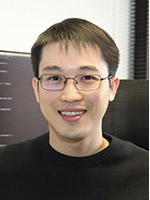
Qizhi He is an assistant professor in the Department of Civil, Environmental, and Geo- Engineering at the University of Minnesota (UMN) and a CTS scholar. Before joining the UMN, he was a postdoctoral researcher in the Scientific Machine Learning Group at Pacific Northwest National Laboratory. His research focuses on developing hybrid physics–AI/ML computational methods for predictive modeling and the simulation of complex mechanical behavior in civil and geomaterials under extreme and multiphysics conditions. His work aims to advance next-generation, high-performance computing and digital-twin technologies that enhance infrastructure resilience and support natural hazard mitigation.

Seongjin Choi is an assistant professor in the Department of Civil, Environmental, and Geo- Engineering at the University of Minnesota and a CTS scholar. Choi was previously a postdoctoral researcher at McGill University in Canada and Korea Advanced Institute of Science and Technology in South Korea. His research focuses on developing machine learning and (generative) artificial intelligence models for transportation and mobility data, with the goal of enhancing both individual-level travel experiences and system-level performance.

Melissa Barnes is the Operations Division artificial intelligence program manager (mobility) at MnDOT and a licensed civil engineer with more than 21 years of experience in transportation. She has worked at MnDOT for more than 12 years, including positions in Central Office and the Metro District. Her expertise spans program delivery, traffic engineering, planning, safety, operations, project management, policy, and cross-functional leadership, and she is known for her commitment to equity and collaboration.